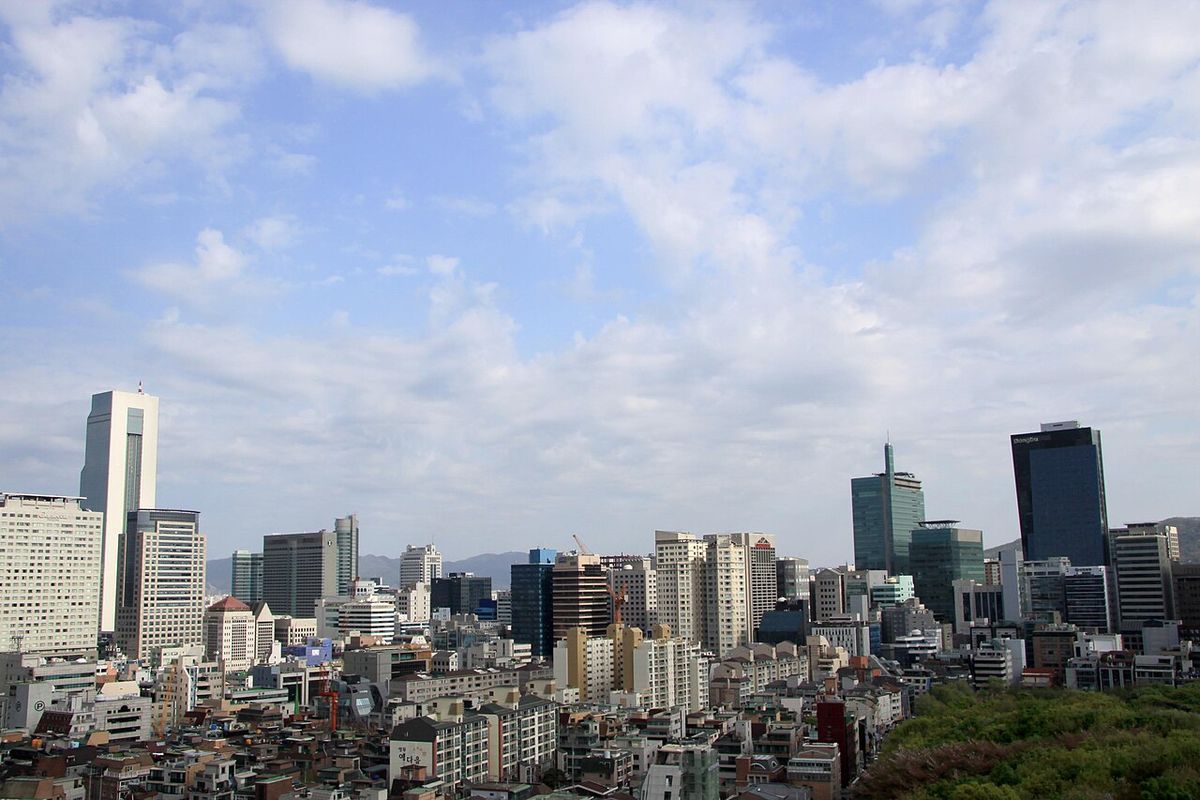
For a first visit, split Seoul into three zones: Gangbuk (the old center north of the Han River, including Myeongdong and Jongno), Hongdae, and Gangnam. Most first-timers will find Gangbuk the easiest base, Hongdae suits nightlife and cafés, and Gangnam suits modern shopping and business trips. Whichever you pick, stay close to a subway station.
Seoul’s three zones in plain terms
Choosing a base was the hardest decision for me too, because Seoul is huge and every guide lists a dozen neighborhoods. In practice you can simplify it to Gangnam, Gangbuk and Hongdae.
The subway network is good enough that being near a station matters more than the exact neighborhood. In my experience, one hour on the subway gets you to almost every major sight in Seoul. A “wrong” choice is therefore rarely a disaster, as long as you are within walking distance of a station.
Quick comparison
| Zone | Best for | Airport train | Trade-off |
|---|---|---|---|
| Gangbuk (Myeongdong, Jongno, Seoul Station) | First trips, palaces, shopping, street food | Express train runs non-stop to Seoul Station | Busy, crowded streets |
| Hongdae | Nightlife, live music, cafés | All-Stop train stops at Hongik University Station | Noisy at night; farther from the palaces |
| Gangnam | Modern shopping, malls, business, K-pop sights | Not on the AREX line | South of the river, away from the old center |
Gangbuk: Myeongdong, Jongno and Seoul Station
The palaces, hanok lanes, markets and N Seoul Tower are all on this side of the river, so you spend less time commuting.
Myeongdong is the usual pick. Visit Seoul describes it as a shopping hub with street stalls, retail shops and many Korean cosmetics stores.
Jongno and Insadong are calmer and closer to the palaces. Seoul Station suits you if you plan to take the KTX, and VisitKorea calls it a major hub of the city. If that is your plan, see our KTX booking guide.
Local tip: Check which Myeongdong exit your hotel is nearest to before you arrive. The shopping street is around exits 5 to 10 of Line 4, so a hotel at the far end of the district can mean a longer walk with luggage.
Hongdae: nightlife and the direct airport train
Hongdae, around Hongik University, is known for street art, indie music, clubs and late-night eating. It is lively and young, but not quiet. Light sleepers should ask for a room away from the main streets.
Its big practical advantage is the airport link. According to VisitKorea, the AREX All-Stop Train stops at Hongik University Station and can be used with transportation cards. You need no transfer.
Local tip: For Hongdae, take the All-Stop train, not the Express. VisitKorea notes that the Express runs non-stop to Seoul Station and does not stop at Hongik University, so you would have to ride back out again.
Gangnam: modern Seoul south of the river
Gangnam has big malls, office towers, business hotels and K-pop landmarks. It fits business travel, shopping-focused trips and visitors with appointments in the area.
As a first base it has one drawback: the historic sights are north of the river, so you will spend more time on the subway. Consider it if your plans are mostly in Gangnam itself.
Why the subway matters more than the neighborhood
Seoul’s subway is cheap and covers the whole city. The base fare is 1,550 won with a transit card, paid by every adult rider, tourists included. It covers the first 10 km, with small add-ons on longer trips. Our Seoul subway guide explains lines and transfers.
Winter is another reason to stay close to a station. When I was in Seoul in winter, the wind made it feel like -15 to -10°C outside. Indoors (malls, coffee shops, cafés, restaurants, department stores) it was hot. Several thin layers worked better than one thick coat, and our winter packing list covers what to bring.
How to choose in four steps
- Decide your main goal. Palaces and general sightseeing point to Gangbuk. Nightlife points to Hongdae. Modern shopping or business points to Gangnam.
- Pick a hotel within walking distance of a subway station. Look at the walking route on a map, since hills and long blocks add time with luggage.
- Match the airport train to your area. The Express goes to Seoul Station and the All-Stop goes to Hongdae.
- Plan day trips around the one-hour rule. Pick one area per day and use the subway for the rest.
Getting from Incheon Airport to your area
The Express runs non-stop to Seoul Station in about 43 minutes from Terminal 1 and 51 minutes from Terminal 2, according to VisitKorea. The Seoul Guide lists the adult fare at 13,000 won.
The All-Stop is the cheaper option. The Seoul Guide gives the transport-card fare to Hongik University as 4,650 won from Terminal 1 and 5,250 won from Terminal 2. The All-Stop ride to Seoul Station takes about 60 minutes from Terminal 1.
Local tip: Sort out your phone connection before you land, since you will need maps for the walk from the station to your hotel. Our eSIM vs SIM vs pocket WiFi comparison helps you decide.
FAQ
Can I split my stay between two areas?
Yes, and it works well for longer trips. A common plan is to spend the first nights in Gangbuk for sightseeing and the last in Hongdae for nightlife and an easy airport run. Each move is only one subway ride.
Is Seoul Station a good base?
It suits you if you are taking the KTX or want the Express airport train at your door. Most other first-timer attractions need a short subway ride from there.
Is Hongdae too noisy for a first trip?
It is busy late into the night, so it suits travelers who plan to be out. If you value an early night, Gangbuk is the calmer choice.
Which area is best for a short trip of two or three nights?
Gangbuk. With limited time you want to be near the palaces and the main shopping areas, so you spend less of each day on the subway.
Sources
Before you book, check the official sites of the airport railroad and your hotel for current fares and timetables.
- VisitKorea: Airport Transportation Guide
- Visit Seoul: Myeongdong
- The Seoul Guide: AREX All Stop Train
- The Seoul Guide: AREX Express Train
- Korea Wayfinder: Seoul Subway Guide 2026
Featured photo: Shiwon Cho, CC BY-SA 2.0, via Wikimedia Commons
