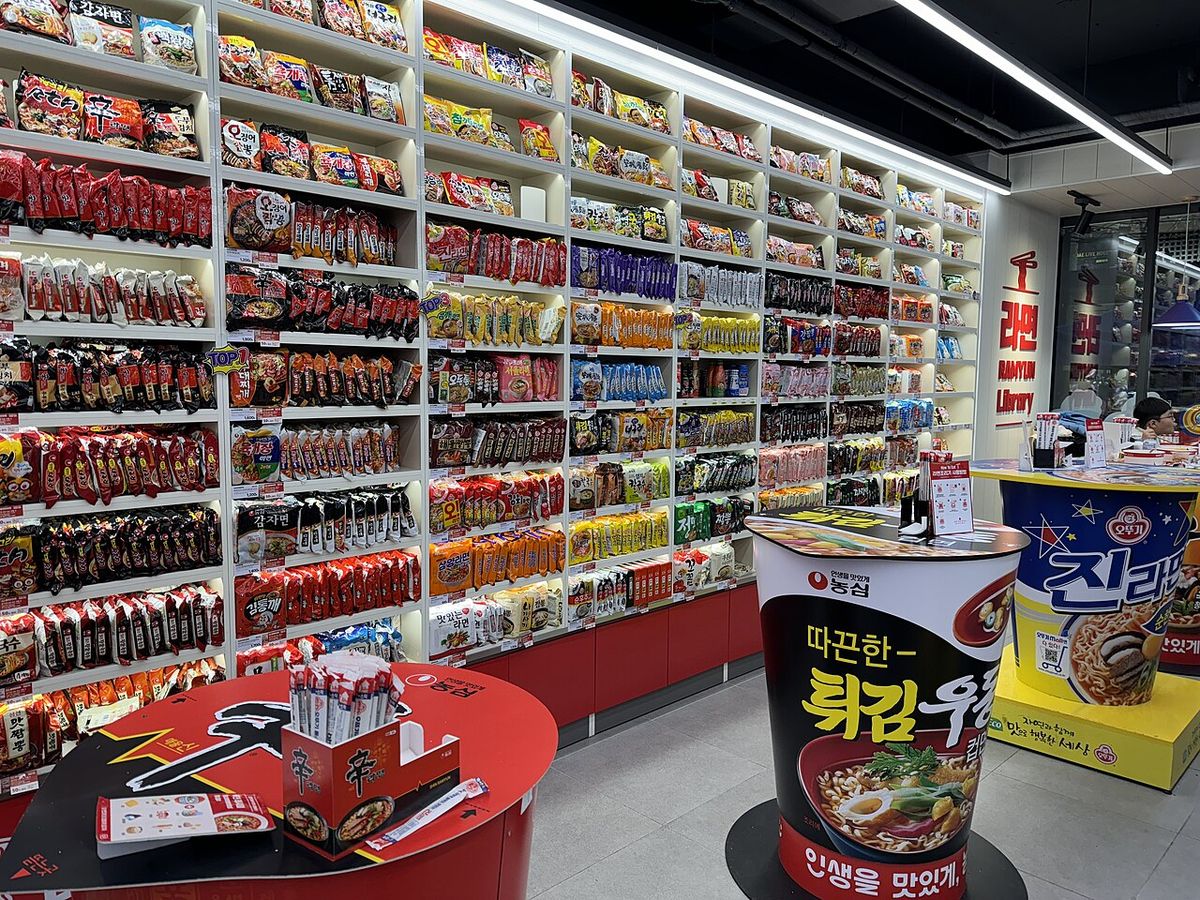
Korean convenience stores (pyeonuijeom) are cheap, often open around the clock, and designed for visitors who don’t speak Korean. In one stop, you can eat a full meal, cook cup ramyeon, buy a transit card and withdraw cash. Pay at the counter, then use the self-serve hot water, microwave and eating counter.
This guide covers what to buy, how the in-store cooking works, and the few rules that catch tourists out.
The main chains and what they have in common
You will see four big names almost everywhere: CU, GS25, 7-Eleven and Emart24. Most urban locations of these chains are open 24/7, including holidays. Rural and some late-night locations may differ, so check the sign if you rely on one.
The basic range is the same everywhere: rice, sandwiches, instant noodles, drinks, snacks and a few daily-use items. Each chain has its own private-label products and limited editions, so a favorite item may not be available at a rival chain. Don’t hunt for a “best” chain. Walk into whichever is closest.
What to buy
Food for a quick, cheap meal
- Triangle kimbap (samgak gimbap): the classic starter. One 2026 price guide puts it at around 1,200–1,500 won each. Larger or premium versions can cost more, so check the shelf label. Pull the numbered tabs in order to keep the seaweed crisp.
- Dosirak (lunch boxes): rice with meat and side dishes, in the refrigerated section. Staff will often ask whether you want it heated, and you can say yes.
- Cup ramyeon: cups cost about ₩1,500–₩2,500 and are cooked on the spot with free hot water or the store’s ramyeon machine.
- Sandwiches, gimbap rolls, hot snacks: many stores also have a small counter with fried snacks and fish cakes.
- Drinks: canned coffee, banana milk, soju and beer.
As a rough guide, two triangle kimbap and a cup ramyeon will likely cost somewhere between 4,000 and 5,500 won, depending on the shelf prices. Prices are the same for everyone, with no tourist surcharge. You pay the shelf price yourself.
Watch the deals
Look for “1+1” (buy one, get one) and “2+1” labels on drinks and snacks. They are common, but the free item is usually the same product, so you need to buy two or three of the same thing. If you are shopping alone, save the extras for later or share them with a friend.
How to cook cup ramyeon in the store
This is the most “Korean” thing you can do at a convenience store. Most stores have a hot-water station and a counter or small table by the window.
- Choose your cup noodles and pay at the counter first. Don’t add hot water before paying.
- Peel the lid back to the fill line and add any powder sachets.
- Fill with hot water to the line at the free hot-water station.
- Close the lid and wait. Most cups need about 3–4 minutes. Check the time printed on the lid.
- Eat at the counter. Chopsticks are free next to the machine. Then sort your trash into the bins provided.
Some stores have a dedicated ramyeon machine. Many GS25 and CU stores have these cooking machines. Press the button for the cook time shown on the lid. If you can’t read the label, point your phone’s translation camera at it.
Beyond food: other things you can do
| Service | What to know |
|---|---|
| T-money transit card | Convenience stores are the most reliable place to buy one. Bring Korean won cash to top up a physical card. You pay for the card and your balance separately. |
| Paying in the store | Cash and cards both work, and the major chains accept Visa, Mastercard and UnionPay. Card acceptance can vary, so keep some cash as a backup. |
| ATMs | Foreign Visa and Mastercard cards generally work at GS25 and CU ATMs, though fees apply. Look for the “Global ATM” sign. Your own bank may add its own fee on top. |
| Parcels | GS25 and CU offer store-pickup parcel services. The shipping fee depends on the parcel’s weight, and you pay it yourself at the kiosk or counter. |
T-money: the details that trip people up
Buying a T-money card at a convenience store is the easiest option for most visitors. The card has a one-time purchase price that is separate from the balance you load. Check the price at the counter, or on the T-money operator’s English site.
Plan to top up with cash. Seoul subway kiosks have started accepting some foreign cards, but not for regular T-money top-ups, so cash is the safe choice at a convenience store counter.
Before you leave Korea, spend down the balance. A leftover balance can be refunded at a convenience store, but refund limits vary by store, and a 500 won service fee usually applies. The fee comes out of your balance. For more on cash and cards, see our post on where you still need cash in Korea.
Rules to know before you go
Alcohol and tobacco need ID
Convenience stores sell beer and soju around the clock. The only hard rule is age: you must be 19 on Korea’s calendar-year basis (born 2007 or earlier in 2026), and stores check ID. Bring your passport. Photos or copies often won’t be accepted. Cigarettes may also have payment-method restrictions.
Bags cost extra
Bags cost extra at all chains because of environmental rules. Paper, waste-volume or biodegradable bags cost 100 won to a few hundred won, and the exact price varies by store. Carry a small shopping bag or use your backpack.
Cards and phone payments
If your card is declined, try another one or pay in cash. Our guide to foreign credit cards in Korea explains why this can happen.
Simple meal ideas
- Breakfast: two triangle kimbap and a canned coffee.
- Late-night snack: a cup ramyeon, a triangle kimbap and a drink at the window counter.
- Picnic or park meal: a dosirak, a sandwich, snacks and drinks. Ask the cashier to heat the dosirak, then carry it out in your own bag.
If you can’t take spicy food, read the packaging carefully before you buy noodles or ready meals. Look out for flame symbols, red peppers or the word “buldak” on the label.
FAQ
Can I eat inside the store?
Usually, yes. Most stores have a counter or small table, a microwave and a hot-water station. Smaller stores may have little or no seating, so you may need to eat outside.
Do I need Korean to shop?
No. Prices are on the shelf, and you can point at what you want. A nod and a thumbs up are enough if the cashier asks about heating. Translation apps help with labels, and our eSIM vs SIM card vs pocket WiFi comparison can help you stay online.
Is convenience store food safe to eat?
It is sold chilled with dates printed on the packaging, so check the date before you buy. Triangle kimbap and similar fresh items are meant to be eaten soon after purchase. If you have food allergies, don’t guess at the ingredients. Use a translation app on the label or choose a product you can identify.
Will every store have all these services?
No. Services such as ATMs, parcel kiosks, T-money sales and ramyeon machines vary by store, so look for signs at the door or ask the cashier.
Sources
- Korean Convenience Store Guide: What to Buy, Eat, and Do (2026), Korea Tool Hub
- Convenience Store Ramyeon: 9 Best Picks to Try (2026), Unboxing Korea
- T-money Card, The Seoul Guide
- Complete Guide to Korean Convenience Stores, Lacha
- Buying Alcohol in Korea (2026): Prices, Hours & Rules, BudgetWon
Featured photo: lazy fri13th, CC BY 2.0, via Wikimedia Commons
