Yes, you can use a foreign credit card in Korea in most situations. VisitKorea says most businesses accept credit cards, including major hotels, department stores and general shops. The weak spots are transit gates, Korean payment apps, some ATMs and the odd small vendor, so bring a backup.
The short version
Visa and Mastercard are your safest bets. VisitKorea also names American Express, but it adds a warning: check service availability before you buy, because some stores may not take cards.
Treat your card as your main payment method, not your only one. Bring a second card from a different bank or network, plus some Korean won in cash.
Where foreign cards work well
- Hotels, department stores and general shops: VisitKorea lists these as places where cards are widely used.
- Restaurants, cafés and convenience stores: These are normally fine for Visa and Mastercard.
- Seoul subway ticket machines (new in 2026): see the next section.
Before you leave home, check that your card has a chip and that you know its PIN. Ask your bank whether it blocks overseas purchases by default.
Seoul subway: cards work at machines, not at gates
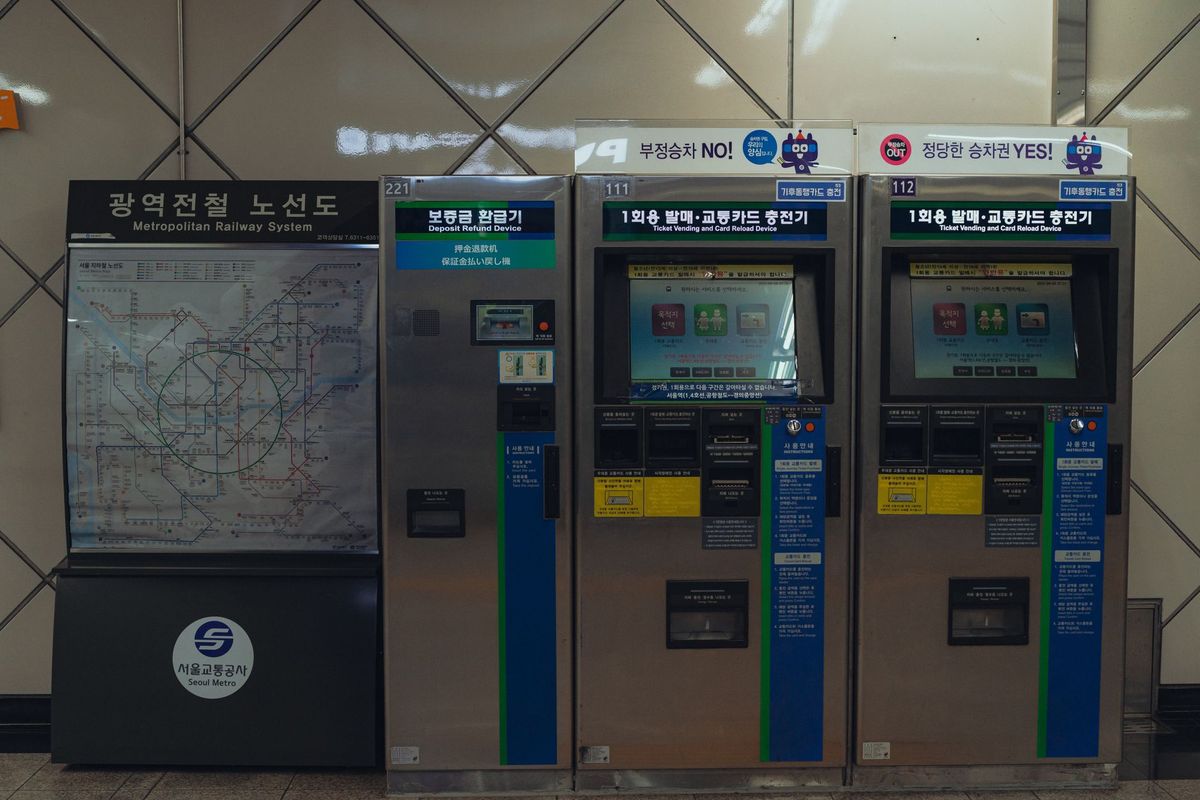
This is where visitors get confused. The Seoul Metropolitan Government announced that from March 17, internationally issued credit and debit cards such as Visa and Mastercard are accepted at 440 new vending machines at 273 stations on Lines 1–8.
Those machines sell single-journey tickets and Climate Cards, which are short-term unlimited passes. When you pay with an international card, an average service fee of about 3.7% applies. You pay that fee on top of the ticket price, and it is separate from anything your own bank adds.
The announcement covers the machines only. It does not say you can tap a foreign Visa or Mastercard at the fare gate or on a bus. I could not find official confirmation of gate tapping, so use a transit card or ticket and check Seoul’s current guidance before you rely on anything else.
Seoul’s announcement also does not mention reloading a regular T-money card with a foreign card. If you want a standard T-money, plan to pay with cash. VisitKorea’s transportation card page says you can buy and load Tmoney and EZL cards at convenience stores nationwide.
Korean payment apps: mostly not for visitors
Kakao Pay is the one that trips people up. Its help center says only domestically issued credit and check cards in your own name can be registered. Your foreign card will still work at a store terminal. It just won’t register inside the app.
Naver Pay is less clear-cut. Its help center reportedly says a foreign card works for direct payment only if it carries the UnionPay brand, though overseas residents can add money to a balance with a foreign card. Other guides describe newer sign-up options for visitors, and the details seem to be changing. Don’t build your trip around it, and test it before you need it at a register.
VisitKorea describes WOWPASS as a foreigner-exclusive prepaid card combining transportation, shopping payments and currency exchange. Check the current terms and fees on the operator’s site before you buy one.
ATMs: look for “Global ATM”
Many Korean ATMs only take domestic cards. For foreign cards, look for a machine marked “Global ATM,” which you’ll find at many bank branches and convenience stores. Machines without the sticker may reject your card.
You can pay two layers of fees. One guide says the Korean ATM operator charges around ₩3,000–₩4,000 per transaction, regardless of the amount. Fees differ by machine, so check the amount shown on screen before you confirm.
Your home bank may then add its own foreign transaction fee. That guide puts it at often 1–3% of the withdrawal amount, plus an exchange-rate markup. With a credit card, it adds that you may also pay a cash advance fee and interest. Withdrawing a larger amount less often means fewer flat fees.
Quick comparison
| Situation | Foreign card? | What to do |
|---|---|---|
| Hotels, department stores, general shops | Usually yes | Use Visa or Mastercard |
| Seoul subway ticket machines (Lines 1–8, new machines) | Yes, for single-journey tickets and Climate Cards | Expect an average 3.7% service fee, paid by you |
| Subway gates and buses | Not confirmed | Use a transit card or ticket |
| Regular T-money top-up | Not covered by Seoul’s announcement | Pay cash at a convenience store |
| Kakao Pay | No, per its help center | Skip it |
| Naver Pay | Limited and changing | Test before relying on it |
| ATMs | Only “Global ATM” machines | Check the fee on screen |
Why a card gets declined
Declines usually come from one of three things: your bank blocking an overseas purchase, a terminal or app that expects Korean ID or a Korean phone number, or a merchant that doesn’t take cards. Online checkouts are the most common problem. Some Korean websites ask for Korean identity verification that visitors can’t complete.
A simple payment plan
- Tell your bank you’re traveling, and ask about foreign transaction fees.
- Pack two cards from different banks or networks.
- Carry some won for markets, small stalls and your first transit card.
- If a payment fails, try the other card before assuming the shop can’t take cards.
- If the terminal still fails, ask whether there’s another card reader, or pay with cash.
Small clinics and private practices set their own payment practices, so ask at the desk before treatment. Our guide to dental treatment in Korea for foreigners covers what to expect there.
FAQ
Do I need to tell my bank before traveling?
It’s a good idea. Some banks block overseas purchases or flag them as suspicious. A quick note in your banking app or a call can prevent a declined card at the register.
Is a debit card as good as a credit card?
Often yes, if it carries the Visa or Mastercard logo and your bank allows overseas use. The Seoul subway machines accept both credit and debit cards. Check your debit card’s foreign fees and daily limits first.
What does “dynamic currency conversion” mean at the terminal?
Some terminals offer to charge you in your home currency instead of Korean won. The conversion rate and any markup may be worse than your card’s own rate, so ask to be charged in won if you are given the choice.
Can I rely on cards alone for a whole trip?
Not completely. Cards cover most spending, but keep some cash for places that don’t take cards and for a standard T-money top-up.
Sources
- VisitKorea: Korean Currency & Exchange Info
- Seoul Metropolitan Government: Climate Cards and Single-Journey Tickets Now Accept International Credit Cards
- VisitKorea: Transportation Cards
- Lacha Korea Guide: ATM Withdrawals with Foreign Cards (unofficial; ATM fees vary, check the screen)
- Seoulstart: Why Foreign Cards Get Declined in Korea (unofficial; summarizes Kakao Pay and Naver Pay help-center rules)