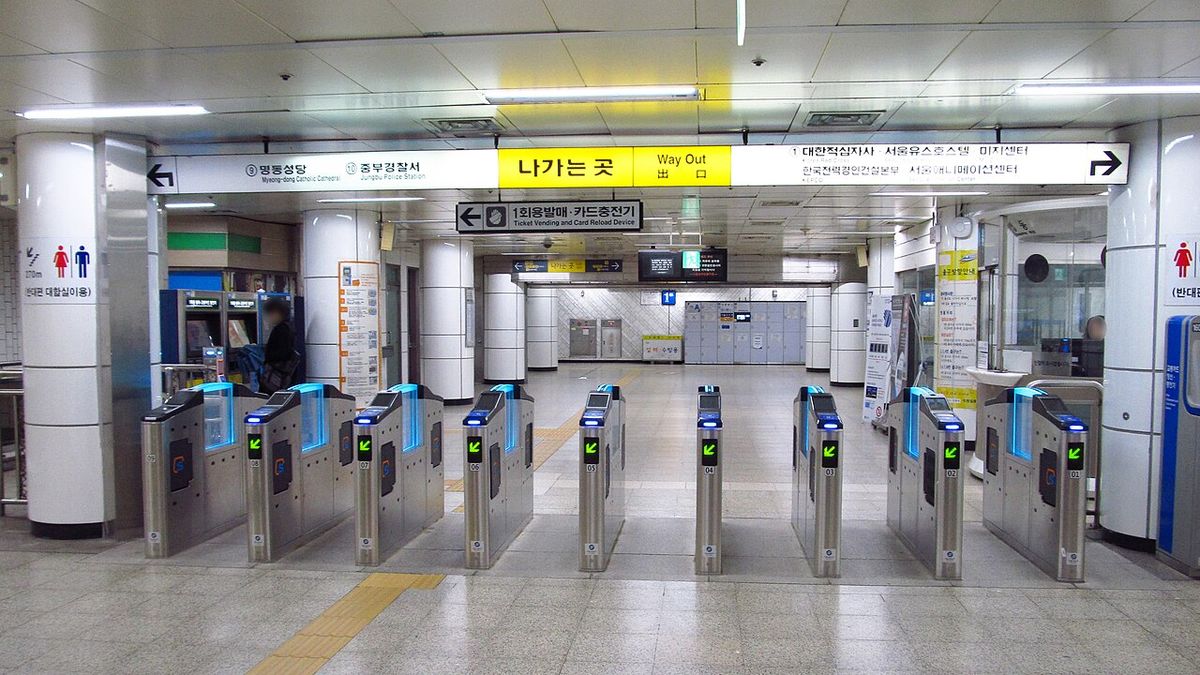
The Seoul subway is the easiest way for visitors to get around the city. An adult ride costs 1,550 won with a transportation card, or 1,650 won with a single-journey ticket, for the first 10 km. One card works on every line, so you never have to buy a ticket for each operator.
This guide covers which card to get, how the lines and transfers work, and the mistakes that cost first-timers money.
How the Seoul subway fare system works
Fares are distance-based. After the first 10 km, an adult pays an extra 100 won for every additional 5 km.
All prices below are what a visitor pays as a regular adult. Concession rates for children, teens and seniors exist, but they usually need a registered card, so they are not covered here.
Which fare option should you choose?
| Option | Adult price (paid by you) | Works on | Good for |
|---|---|---|---|
| Transit card (T-money or similar) | 1,550 won for the first 10 km, plus the cost of the card itself | Subway and buses | Most visitors staying more than a day |
| Single-journey ticket | 1,650 won for the first 10 km, plus a 500 won deposit that is refunded at your destination | Subway only | One or two isolated rides |
| Climate Card short-term pass | 5,000 won (1 day), 8,000 (2 days), 10,000 (3 days), 15,000 (5 days), 20,000 (7 days), plus 3,000 won for the physical card | Seoul buses and subways, excluding the Sinbundang Line and GTX | Days with many rides inside Seoul |
Transit card or Climate Card?
A regular transit card is the simple default. You load money, tap in and tap out, and the fare is deducted. You can buy and top up these cards at convenience stores. Our convenience store guide explains how those shops work.
The Climate Card is Seoul’s unlimited pass. The city designed it for tourists who typically use public transportation two to three times per day. By my math at the 1,550 won base fare, the 1-day pass beats pay-per-ride once you take about four subway rides in a day. That assumes short trips with no distance surcharge.
You can buy the physical Climate Card for 3,000 won at the customer safety centers inside Line 1–8 subway stations and at select nearby convenience stores.
Local tip: Buy a Climate Card only for days when you plan a lot of hopping between districts. On a relaxed day with two or three rides, a loaded transit card costs less. Bring some cash, because top-up machines and small shops often prefer it (see where you still need cash).
Seoul subway lines tourists use most
Lines are numbered and color-coded, and stations have numbers as well as names. Most sightseeing happens on a handful of lines.
- Line 1 (dark blue): Seoul Station and Dongdaemun.
- Line 2 (green): a circular line through Hongdae, Gangnam, Jamsil and Seongsu. It is the one visitors ride most. Trains run in two directions, called inner and outer circle.
- Line 3 (orange): Gyeongbokgung Palace and Anguk, near Insadong and Bukchon.
- Line 4 (sky blue): Myeong-dong and Seoul Station.
- Line 5 (purple) and Line 9 (gold): Yeouido. Line 9 also reaches Gangnam.
- Sinbundang Line: a separate line through Gangnam, outside the Climate Card area.
On a platform, check the direction by the name of the last station on the sign, not by the line color. If you are heading to a palace area, our hanbok rental guide shows which districts you will be in.
How transfers work
Changing from one subway line to another inside the station costs no extra base fare. Follow the line-color signs and do not walk out through the exit gates.
Subway-to-bus transfers also work with a card. If you switch between subway and bus within 30 minutes with a card, you pay one base fare for the first 10 km of the whole trip. Transfers only count if you tap in and out every time. Single-journey tickets cannot be used on buses, so they never get this benefit.
Local tip: Tap out at the exit gate every time. Since March 7, 2026, subway-only riders who do not tap out are charged an extra subway base fare on their next ride.
Step by step: your first ride with a single-journey ticket
- Choose your language at the bottom of the vending machine screen.
- Select “Single-Journey” on the left side of the screen.
- Pick your destination by station name or number.
- Choose the number of tickets and insert the fare plus the 500 won deposit.
- Touch the ticket to the card reader on the right side of the turnstile.
- At your destination, put the ticket into the Deposit Refund Device to get your deposit back.
Local tip: Keep the ticket until you have used the refund machine near the exit gates. A ticket you throw away or forget means a lost 500 won. Seoul Metro also says tickets that are unused or do not work can be refunded at any Seoul Metro station.
Apps and getting around in English
Kiosks have a language setting, and the Seoul Metropolitan Government has run its “Seoul Subway” app for international tourists since April 2023. It gives routes, location-based route recommendations, directions inside stations and nearby attractions.
Many visitors also use Naver Map or KakaoMap, which show exit numbers for your destination. You will need mobile data to use them, so see our eSIM vs SIM vs pocket WiFi comparison.
Local tip: Before you go up the stairs, look for the exit number your app gave you. Large stations can have more than ten exits, and the wrong one can mean a long walk above ground.
Late-night trips
Last trains leave at different times depending on the line, direction and day, so leave extra time for a transfer when you plan an evening out.
FAQ
Is the Seoul subway hard for non-Korean speakers?
No. Ticket machines let you pick your language, and station names are shown in English as well as Korean. The official Seoul Subway app and map apps cover routes and exits.
Can I get a refund for a ticket I did not use?
Yes. Unused single-journey tickets are fully refunded.
Do I pay more for a long trip across the city?
Sometimes. The base fare covers 10 km, and longer rides add distance charges as described above.
Sources
Fares, rules and pass prices were checked in November 2026 against the pages below. Look at the operator page before buying a multi-day pass.
- Seoul Metro – fares and refund policy
- Seoul Metropolitan Government – Public Transportation
- VisitKorea – Transportation Cards
- Seoul Metropolitan Government – Climate Card Tourist Pass
- Korea Sorted – public transportation costs and transfer rules (2026)
Featured photo: LERK, CC BY-SA 4.0, via Wikimedia Commons
