About the author: I spent many years supplying equipment and disposables to dental and medical clinics across Korea, so I’ve seen how they work from the inside.
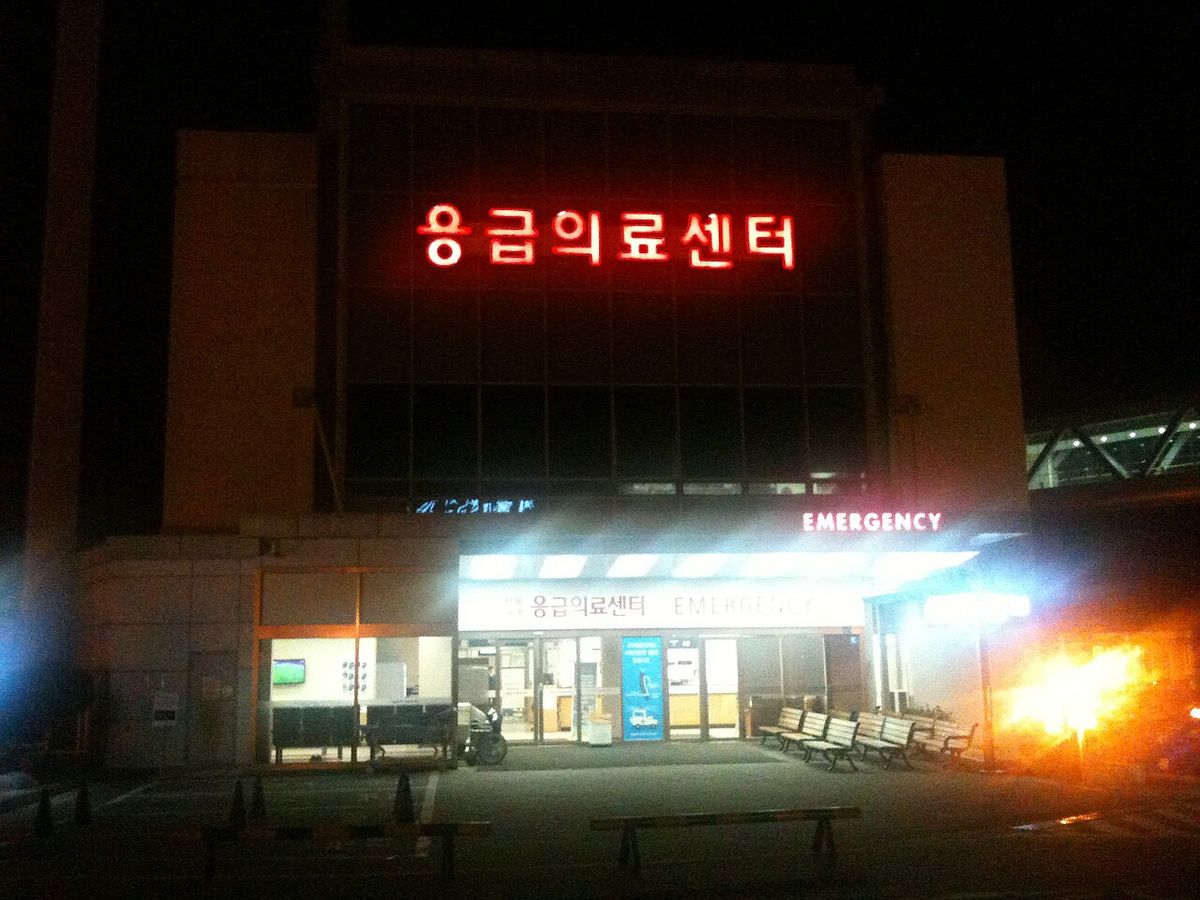
If your stomach pain is severe or getting worse fast, call 119. If it is milder, go to a neighborhood internal medicine clinic (내과) during the day, or a hospital emergency room (응급실) at night. This guide covers how to choose, who to call, what to bring and what to expect when you pay.
This is general travel information, not medical advice. If you are unsure how serious your symptoms are, treat them as urgent and get help.
Step 1: Decide how urgent it is
Call 119 if the pain is severe, you feel faint, or you cannot get to a hospital yourself. Other warning signs, such as chest pressure or severe shortness of breath, are also reasons to skip a walk-in clinic. One Seoul walk-in clinic lists these as cases where a walk-in clinic is the wrong place.
For milder problems, such as an upset stomach during the day, a local clinic is the usual first stop. Via Korea’s guide says many local clinics (의원) accept walk-ins and have short waits.
Your options at a glance
The costs below are rough, unofficial estimates for visitors without Korean national health insurance. They are what you would pay yourself. Sources vary a lot, so treat them as a guide and ask for the price before treatment if you can.
| Option | Best for | Who pays / typical cost |
|---|---|---|
| 119 ambulance | Severe pain, can’t travel safely | The public ambulance is free. Hospital treatment is billed separately. |
| 내과 (internal medicine) clinic | Milder pain or an upset stomach, daytime | Uninsured visitors pay in full. One estimate is about ₩30,000–₩70,000 for a clinic visit. |
| Hospital ER (응급실) | Serious symptoms, nights, weekends | Uninsured visitors pay in full. Estimates run from about ₩50,000 to over ₩600,000, depending on tests such as CT (low, high). |
| Late-night pharmacy (약국) | Minor symptoms at night, when you can walk | You pay for the medicine. A dispensing surcharge applies at off hours. |
If it is an emergency: call 119
- Dial 119 from any phone. Seoul’s official site says the ambulance service is free and interpreters are available for foreign nationals.
- Say “English, please” and give your location. Korea’s foreign ministry says foreign-language calls are forwarded to the Korea Tourism Organization for interpreting, in English, Japanese or Chinese.
- Stay on the line and wait for the crew. A hotel or hostel front desk can help with the address in Korean.
One caution: a private ambulance from a hospital is different from the public 119 service. Seoul’s Jung-gu district notes that hospital-run ambulances charge a fee based on distance, with extra charges if medical staff ride along. The Jung-gu page is older and still lists a surcharge between midnight and 4 am. National ambulance fees were revised in mid-August 2026, however. A 20% surcharge now applies on weekday evenings from 6 pm to 9 am and all day on Saturdays and public holidays. A waiting fee of ₩6,000 per 10 minutes also applies after the first 30 minutes at the hospital. Ask for the price before you agree to a private ambulance.
The call is for real emergencies. If you are unsure and not in danger, the 1330 option below is gentler.
If it’s not an emergency: use 1330 for language help
The 1330 Korea Travel Hotline is run by the Korea Tourism Organization. VisitKorea lists it as +82-2-1330 with support in Korean, English, Japanese, Chinese, Russian, Vietnamese, Thai and Malay. Its FAQ describes it as the line for non-life-threatening situations such as interpretation help.
Ask the operator to help you find a clinic, or to stay on the line as an interpreter while you talk to the front desk. Some guides say the operator can do a three-way call, but check what they can do for medical questions on the day.
You may see 1339 in older guides as a “medical” number. VisitKorea’s own pages are inconsistent, listing it for infectious disease emergencies on one page and medical emergencies on another. For stomach pain, stick with 119 and 1330.
Going to a clinic or ER yourself
- Search in a map app. Look for 내과 (internal medicine), which one guide lists for stomachaches. For the ER, search 응급실 and pick a larger hospital.
- Check the hours. The same guide says standard clinics usually run roughly 9 am–6 pm on weekdays and 9 am–1 pm on Saturdays, but hours vary. Call ahead or check the listing, since some clinics only take appointments.
- Bring your documents. Insight Bridge suggests your passport, a credit card or cash, your travel insurance details, a medication list and allergy information.
- Register and describe your symptoms. Note where the pain is, when it started and what you have already taken. A translation app can help.
- Pay at the counter. An unofficial guide says hospitals expect uninsured foreigners to pay up front. Ask your insurer which documents you need to file a claim.
At an ER, patients are seen by severity rather than arrival order. CheckMate Korea explains that Korea uses a mandatory five-level triage scale called KTAS. If your problem is minor, expect a wait.
Large hospitals with international centers
Many big hospitals have an International Health Care Center with interpreters. VisitKorea lists centers such as Asan Medical Center and Samsung Medical Center in Seoul. Asan’s center is listed as open Monday to Friday, 08:30–17:30, and closed on weekends and public holidays.
That makes these centers better for planned visits on weekdays. For sudden pain at night or on a weekend, the hospital’s regular ER is the realistic route. In Seoul, the Seoul Global Center also runs a 24-hour Medical Referral Service with English-speaking, medically trained staff. Check the site for current contact details.
Pharmacies after hours
Regular pharmacies often close in the evening. The Korea Times explains that local associations designate on-duty pharmacies for late nights, weekends and holidays. Public late-night pharmacies typically run from about 10 pm to 1 am, though Busan’s list shows some opening earlier, so confirm by phone.
To find one, try e-gen.or.kr, the National Emergency Medical Center portal for open ERs and pharmacies. Invest Korea describes an English version, while other guides call it Korean-only, so use a translation tool if needed. The holiday pharmacy site is pharm114.or.kr.
Busan’s official page says pharmacy dispensing fees carry a 30% surcharge after 18:00 on weekdays and on weekends and holidays. Pharmacists can help with minor problems, but they are not a substitute for a doctor if your pain is severe or not improving.
Before you travel
- Save 119 and 1330 in your phone, along with your insurer’s emergency number.
- Save your hotel’s address in Korean.
- Read your travel insurance terms for medical cover and whether the insurer pays hospitals directly.
If your pain turns out to be in your mouth rather than your stomach, see our guide to dental treatment in Korea for foreigners.
FAQ
Will a clinic refuse me because I don’t have Korean insurance?
Insight Bridge says insurance is usually not the main obstacle at ordinary clinics. The bigger issue is payment, since you may be treated as a self-paying patient.
Will my overseas travel insurance pay the hospital directly?
Do not assume it will. One older guide says international insurance is not recognized as a form of payment in Korean hospitals, so you may need to pay first and claim later. Ask your insurer before you travel whether it can arrange direct billing.
Can I walk straight into a big university hospital?
Not usually for routine care. K-Insider notes that large university hospitals often need appointments weeks in advance, while neighborhood clinics are more flexible. The ER is the exception for urgent problems.
Does 1330 work outside Seoul?
Yes. VisitKorea describes 1330 as a public service for local and international travelers. Seoul’s site lists it as a 24/7 national travel line, so you can call it from anywhere in Korea.
Sources
- VisitKorea – Emergency Situations
- VisitKorea – FAQ: Who can I call in an emergency?
- Seoul Metropolitan Government – Medical Facilities
- Busan Metropolitan City – Pharmacy hours and late-night pharmacies
- The Korea Times – What to know about Korean pharmacies
- Kyeonggi Ilbo – 12년 만에 구급차 요금 인상…오늘부터 ’30분 초과 대기료’ 부과
- Seoul Shinmun – 오늘부터 민간구급차 요금 인상…30분 이상 병원 대기하면 ‘대기요금’도