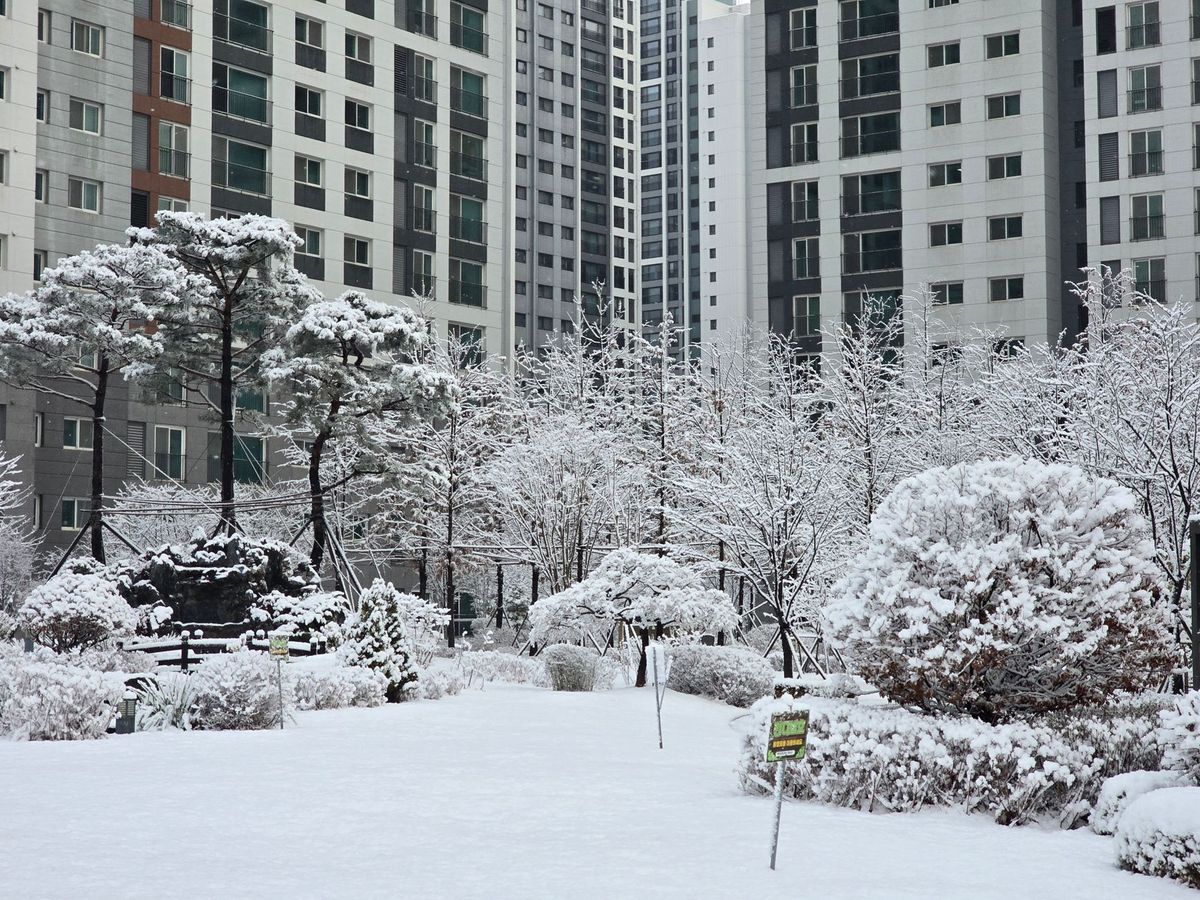
Pack a warm padded coat, thermal base layers, gloves, a scarf and non-slip shoes, plus a rich moisturizer and lip balm for the dry indoor air. Korean winters are cold and dry outside, and indoor spaces are often very warm. That is why layers you can take off easily matter more than one huge coat.
How cold is a Korean winter?
VisitKorea describes winter (December to February) as cold and arid. It says average temperatures sit around 0 to 1°C and often fall below zero, so thick outerwear is needed.
Seoul averages -1.9°C in January, with an average daily low of -5.5°C, based on KMA’s 1991–2020 normals. Mornings are much colder than afternoons; in Seoul the gap between the average January high and low is about 7.6°C. Wind makes it feel colder still, and cold snaps can be much harsher than the averages suggest.
The south and the coast are milder, while the mountains are coldest. Here are January averages from the same KMA-based guide:
| Place | Average January temperature | Packing level |
|---|---|---|
| Seoul | -1.9°C | Full winter kit |
| Busan | 3.6°C | Warm coat, lighter layers |
| Jeju City | 6.1°C (windy and often cloudy on the north side) | Windproof outer layer |
| Daegwallyeong (Gangwon mountains) | -6.9°C | Everything, including a hat and thermal socks |
If you are still choosing your dates, my month-by-month guide to visiting Korea compares the seasons.
Clothes to pack
Think in three layers, since buildings, subways and cafes are often warm while the street is freezing. A close-fitting thermal top and bottoms make a good base, with a knit sweater, fleece or thin padded jacket on top. Choose mid layers you would be happy to wear on their own indoors.
- Outer layer: a padded or puffer coat, ideally long and windproof. Many Koreans wear long padded jackets and thermal inner wear in winter.
- Base layers: thermal tops and leggings. Pack pants loose enough to fit over them.
- Mid layers: two or three sweaters or fleeces that are easy to peel off.
- Accessories: VisitKorea recommends winter jackets, gloves and scarves, plus non-slip shoes for walking on snow. I would add a warm hat or earmuffs.
- Shoes: waterproof boots or shoes with real grip. Wet snow and icy patches are common after a snowfall.
- Socks: bring several pairs of warm ones. Many homes and some traditional guesthouses and restaurants ask you to take your shoes off.
Honestly, it often feels much colder that the forecast says. On the coldest days I’ve spent in Seoul, it felt like -15°C to -10°C with the wind. Pack several warm layers instead of one heavy coat, because shopping malls, department stores and subway cars are heated and get very warm inside.
What you can wait to buy in Korea
You do not need to pack everything. One local guide suggests buying gloves, earmuffs or a neck warmer, a scarf and hot packs at a Daiso store or a convenience store on your first day. You could then buy thermal underwear and an outer layer the next day, after checking sizes. Korean sizing can run small, so try things on if you can.
Hot packs are sold in many shops, and our guide to Korean convenience stores covers what else they stock.
Cold waves: when to pack extra
KMA, the Korea Meteorological Administration, issues cold wave advisories from October to April. An advisory can be issued when morning lows are expected to stay at -12°C or below for at least two days, or after a sharp drop. You can check alerts on the KMA English site or in the government’s Emergency Ready app.
On those days, add your thickest thermal layer and cover your ears, hands and neck. Check the forecast the night before you head out for a long day.
Skincare for dry winter air
Cold wind dries skin outside, and heated rooms dry it again inside. The Korea Times notes that both the cold, dry weather and indoor heating leave skin vulnerable to moisture loss. A simple, gentle routine is usually enough for visitors.
- Moisturizer: bring a richer cream than you use in summer, and a lip balm. Korean pharmacies and beauty shops sell many options if you run out.
- Hand cream: useful when you are constantly moving between cold air and warm rooms.
- Sunscreen: keep using it. UV rays penetrate clouds and reflect off snow.
- Exfoliating acids: consider cutting back, especially if your skin feels tight. One Korean skincare guide suggests AHA/BHA no more than once a week in winter.
- Shower temperature: very hot showers can leave skin feeling drier, so warm is kinder.
Treat these as general comfort tips, not medical advice. If you get a rash, cracked skin or itching that does not settle, see a doctor. Our guide on which doctor to choose in Korea explains how to pick a clinic.
Indoor heating: ondol and dry rooms
Korea’s traditional heating is called ondol, which means “warm stone.” It is a floor-heating system that warms a room from below rather than heating the air. Even today, many Korean homes, including modern apartments, use some form of ondol-style heating. Your own room may have a thermostat panel on the wall, or use radiators or an air conditioner for heating.
Here is how to get the most from it:
- Ask your host or the front desk how the heating is controlled before your first night. Panels are often labeled only in Korean.
- Turn the heating on a little before you want the room warm. Floor heating tends to warm up gradually.
- If you sleep on a floor mattress, expect the floor to be the warmest spot in the room.
- Keep the room comfortable rather than hot. The Korea Times suggests about 20°C indoors and 50% humidity, and says an extra layer beats turning the heating up.
- Air the room briefly now and then. The same article suggests opening windows occasionally for fresh air.
Humidifiers and dry air
Dry air can affect your skin, lips and throat. Sources suggest roughly 40–50% indoor humidity in winter (one guide says 40–45%, while the Korea Times says 50%). A small humidity meter can help you judge the room.
If your accommodation has a humidifier, clean it regularly (every few days) and change the water for fresh water every day. If you can’t get one, a damp towel or a bowl of water near (not on) the heat source may help a little. Ask your host before using either.
Quick packing checklist
- Padded coat, thermal base layers, sweaters or fleeces
- Gloves, scarf, hat or earmuffs, warm socks
- Waterproof, non-slip shoes
- Rich moisturizer, lip balm, hand cream, sunscreen
- Phone with a data plan for weather alerts. See our eSIM, SIM card and pocket WiFi comparison.
FAQ
Can I wear sneakers in a Korean winter?
You can on dry, mild days, especially in Busan or on Jeju. Pick waterproof soles with good grip, because wet snow and ice make smooth soles slippery. For the mountains, choose proper winter boots.
Is it warm enough indoors to skip the heavy layers?
Often yes, but you will go back outside. Your accommodation’s heating may also differ from public buildings.
Do I need a coat for Busan or Jeju?
Yes, but a lighter one may do. Both are milder than Seoul on average, but Jeju City is windy. A windproof jacket with layers underneath is a safer choice than a thin coat.
What if I forget something?
You can buy basics after you arrive. Check sizes and keep your receipts, as returns work differently from shop to shop.
Sources
- VisitKorea: Climate & Seasons
- Korea Starter Kit: Korea Winter Weather by City (KMA 1991–2020 normals)
- The Korea Times: Keeping your skin moist during dry winter
- South of Seoul: The Korean Ondol
- Lacha Korea Guide: Korea winter clothes, what to buy locally
- Cleveland Clinic: 4 Ways a Humidifier Can Improve Your Health